Table of contents: The Effect of a Finished Basement on Home Value Maximizing ROI with a Basement Remodel Comparing Finished and Unfinished Basements Advantages of Remodeling Your Basement Essential Features in a Basement Renovation Creating Functional and...
Planning a home renovation in Connecticut? Permits are essential to ensure a smooth project, whether it’s a new in-law suite in West Hartford or a full basement remodel in Southington. Hiring a reputable contractor like Better Built Basements, who is familiar with...
With so many people working from home now, many families have had to get creative with their home offices. The basement has often been the go-to choice for an office, even if accommodations aren’t perfect. You can use these basement office ideas to make the most of...
Blog Categories
Contact Us
Follow Us
Basement Accessibility & Aging-in-Place Remodeling in Connecticut
Basement accessibility and aging-in-place remodeling are becoming essential for many Connecticut homeowners. As families plan for long-term comfort, multi-generational living, and safer home environments, basements often become the natural place to add functional living space.
With the right upgrades such as wider doorways, zero-threshold showers, improved lighting, and slip-resistant flooring basements can become safe, comfortable, and senior-friendly spaces that support aging parents, long-term guests, or future personal needs.
Homeowners in Berlin, CT, and surrounding towns increasingly look to remodel their basements so that they can be used as in-law suites, accessible bathrooms, safe living areas, or flexible rooms that accommodate mobility challenges. This guide explores key accessibility features, safety improvements, design recommendations, and the elements that help create a truly aging-in-place–ready basement.
Why Accessibility Matters in Basement Remodeling
Basements present unique challenges: there tends to be less natural light, potential moisture, tighter layouts, and stairs connecting them to the main floor. For seniors, these factors can increase the risk of slips and falls and everyday difficulties. Aging-in-place remodeling helps reduce those risks by improving circulation pathways, visibility, safety features, and bathroom accessibility.
In Connecticut where multi-generational households are common families often convert basements into private living areas or in-law suites for aging parents or long-term guests. Creating a safe and accessible lower level not only improves day-to-day comfort but also increases a home’s long-term usability and value.
Accessibility upgrades also follow many of the safety principles recommended by organizations such as ADA.gov, CDC, and AARP HomeFit, all of which emphasize design choices that reduce injury risk and support independent living.
Safe Basement Bathrooms for Seniors
Bathroom safety is one of the most critical components of an aging-in-place basement remodel. Basement bathrooms already have limited natural light and may experience higher humidity, which makes a senior-friendly design essential.
Comparing Finished and Unfinished Basements
Bathroom safety is one of the most critical components of an aging-in-place basement remodel. Basement bathrooms already have limited natural light and may experience higher humidity, which makes a senior-friendly design essential.
Zero-Threshold / Curbless Showers
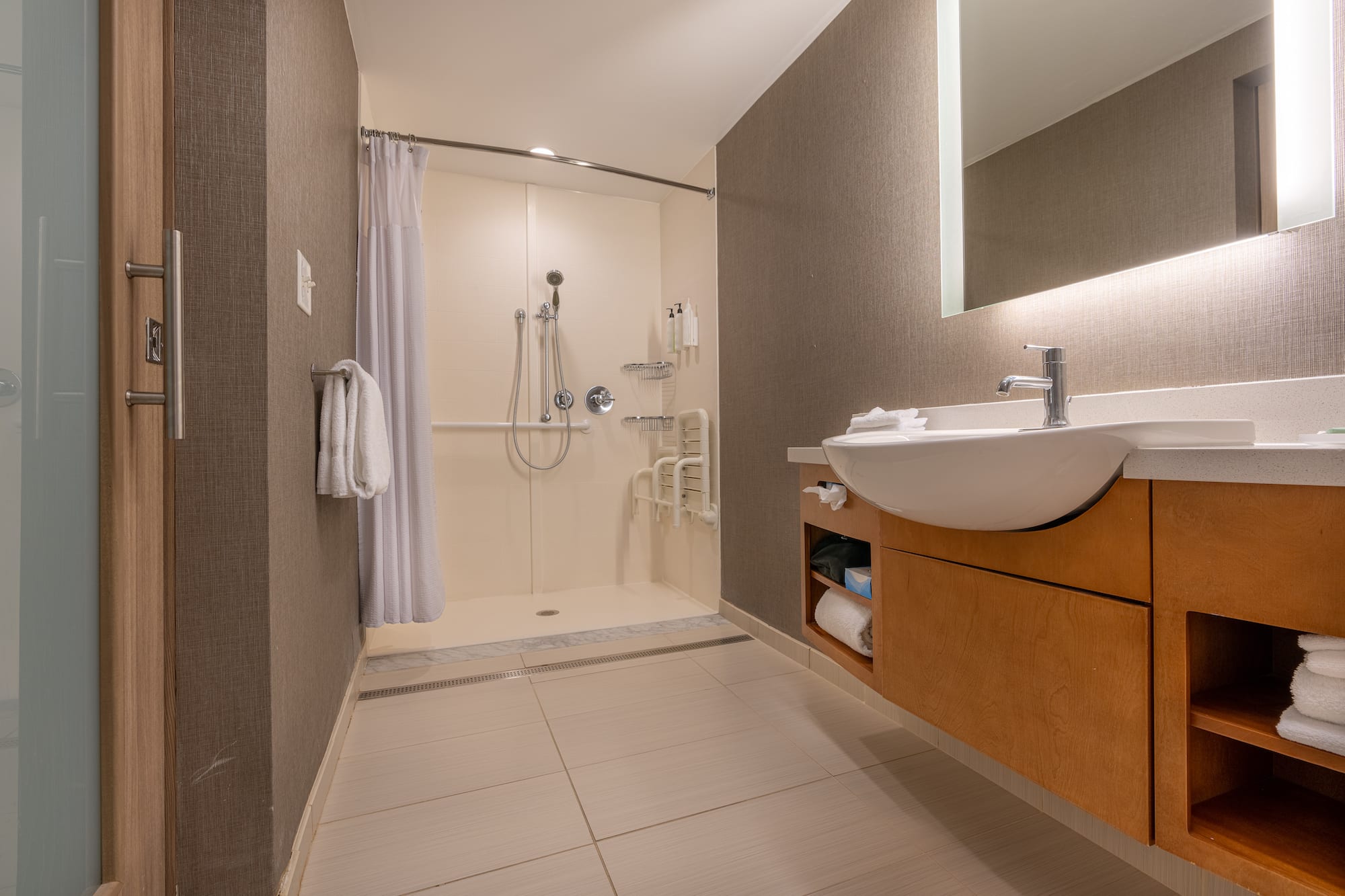
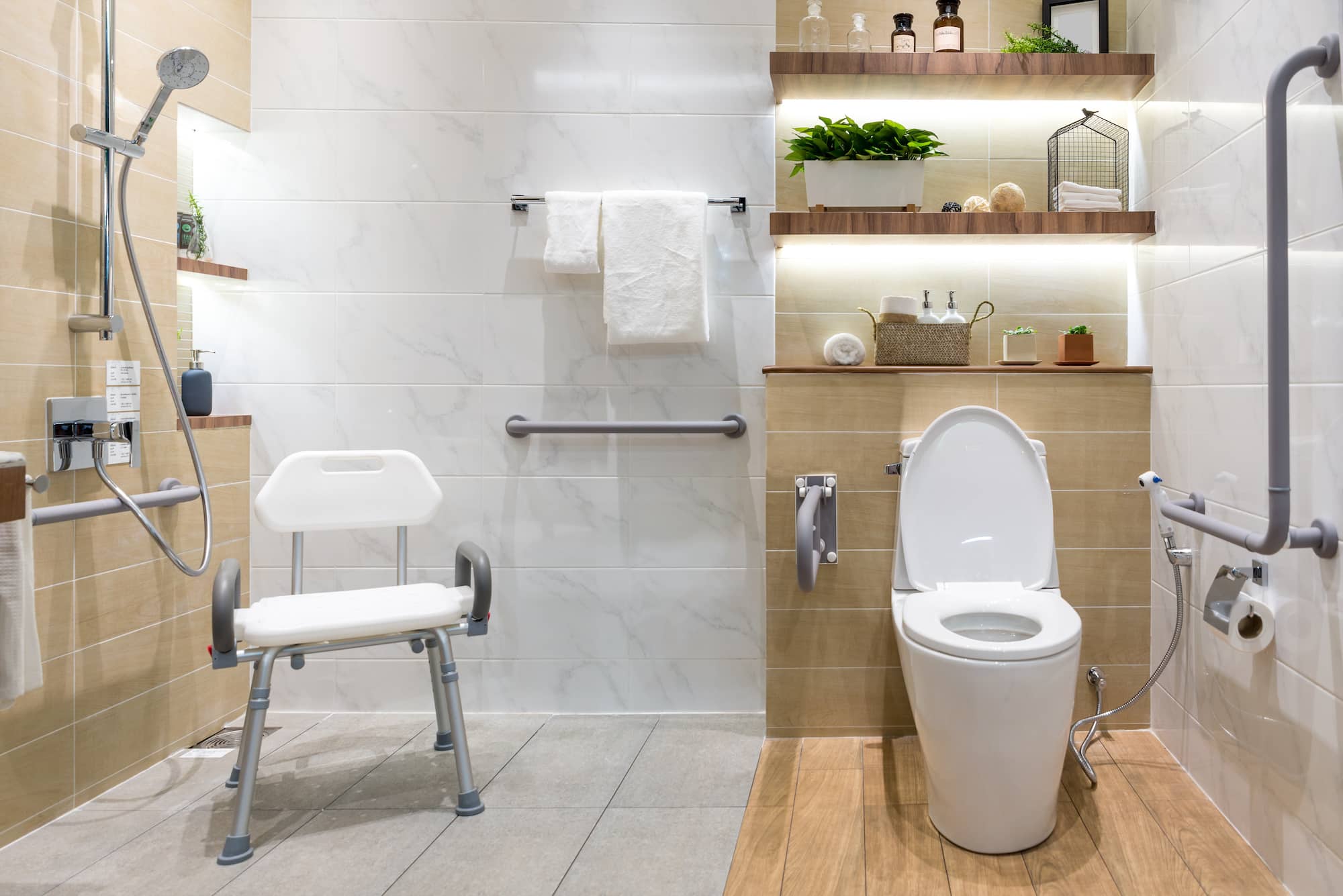
Curbless showers eliminate the step into the shower, reducing tripping hazards. Pairing them with slip-resistant flooring, grab bars, a shower seat, and a handheld showerhead creates a safe, easy-to-navigate bathing space. The zero-threshold design aligns with accessibility recommendations from ADA.gov.
Grab Bars With Proper Placement
Grab bars should be installed:
At the shower entrance
Inside the shower
Beside the toilet
Along transitional walls
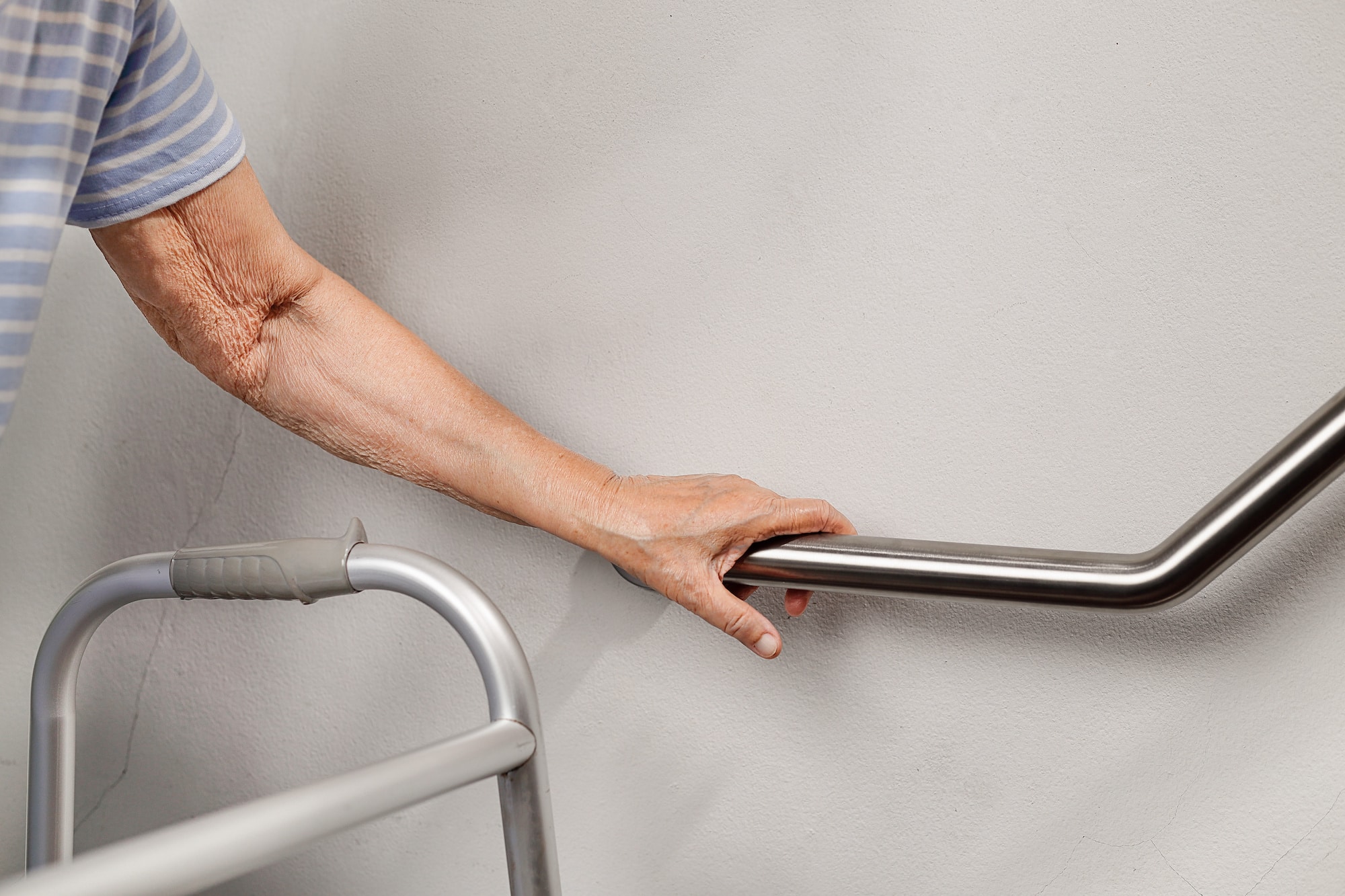
A secure, reinforced installation of these grab bars helps prevent falls—one of the CDC’s top safety recommendations for older adults. Sometimes extra framing is needed during construction to ensure a solid attachment point for these bars which makes proper planning that much more important.
Comfort-Height Toilets
Comfort-height toilets (typically 17–19 inches tall) make sitting and standing easier for seniors and those with knee or back issues. Pairing these with side-mounted grab bars increases stability and confidence.
Slip-Resistant, Moisture-Safe Flooring
Basement bathrooms should use flooring designed to reduce slipping. Ideal choices include:
Textured or matte porcelain tile
Waterproof LVP with anti-slip finish
Rubber-backed flooring
Avoid glossy or polished surfaces that become slick when wet. Again, the goal with all of these features is to create a safe space for anyone using it.
Improved Bathroom Lighting
Basement bathrooms often lack windows, making lighting essential. Effective solutions include:
LED overhead lighting
Vanity lights placed at face level
Motion-activated night lighting
Shower-safe recessed lights
Good visibility supports safer movement—strongly recommended by AARP HomeFit. One of the best ways to avoid a possible hazard is seeing it and good ligthing goes a long way to helping to reduce any tripping issues.
Temperature Safety & Anti-Scald Fixtures
Thermostatic mixing valves ensure water temperature remains stable, reducing the risk of burns. Anti-scald shower and faucet technology is especially important for seniors with reduced temperature sensitivity. These kinds of options when selecting plumbing hardware aren’t major, but make a big difference in the final space. Again, this is all part of the planning process.
Wider Doorways & Easy-Open Hardware
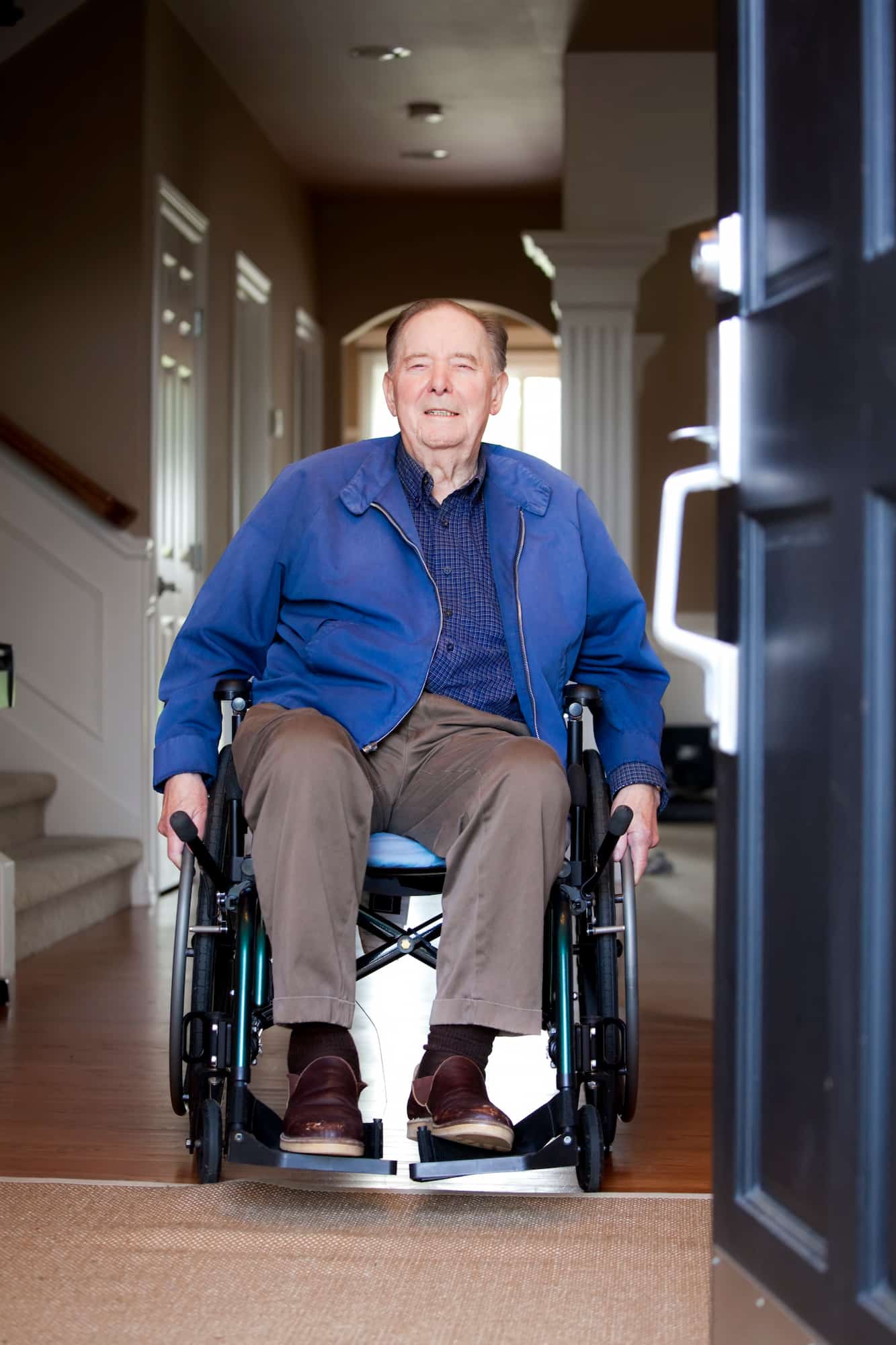
Wider (32–36 inch) bathroom doors increase mobility access for someone using a walker or wheelchair or just to provide space if someone requires help. Lever-style handles are easier to operate than round knobs for anyone who might have grip issues. These small changes can dramatically improve usability for aging adults.
Accessible Basement Layout & Mobility Planning
A well-planned layout is the foundation of any senior-friendly basement. Creating clear pathways, reducing obstacles, and allowing for easy navigation help accommodate mobility devices and decrease fall risk.
Key considerations include:
Wider walking paths (ideally 36–42 inches)
Smooth transitions between rooms
Minimal furniture congestion
Low-profile thresholds
Adequate turning radius for wheelchairs or walkers
Storage that keeps floors uncluttered
Basement layouts should be designed so that essential areas—bathrooms, seating, sleeping, and exits—are easy to reach without obstacles.
Basement Staircase Safety Upgrades
Stairs are often the biggest accessibility challenge in a basement.
Important safety upgrades include:
Sturdy handrails on both sides
Non-slip stair treads
Bright overhead lighting
Step-edge visibility or high-contrast markers
Landing lighting for safe approach
Eliminating loose rugs or mats near stairs
For seniors with more advanced mobility needs, stairlifts can be added, depending on the staircase’s width and structure. Those are speciality items, so if a stair lift is something you are thinking about, talk to your designer or contractor very early on in the process to make sure it’s factored into your plan.
Lighting Design for Safer, Senior-Friendly Basements
Basements already have lower natural light than main floors, which can make depth perception and navigation more challenging.
Effective lighting solutions include:
Layered lighting (ambient, task, and accent)
Motion-sensor lighting for night use
High-CRI LED bulbs that mimic daylight
Under-cabinet or wall-mounted lighting
Avoiding dark corners and shadows
Installing switches at accessible heights
Lighting design is one of the most impactful aging-in-place improvements for basements, especially for individuals with low vision.
Flooring Solutions for Senior-Friendly Basements
Flooring should balance safety, comfort, and moisture-resistance.
Recommended options include:
Slip-resistant luxury vinyl plank
Rubber flooring (excellent cushioning)
Low-pile carpet tiles
Matte-finish tile
Avoid:
Glossy tile
High-pile carpets
Unsealed concrete
The right flooring helps reduce falls and remains stable even in basement conditions with moisture.
Simple modifications can make a big improvement in everyday usability. Widening doorways to 32–36 inches helps create a more open, accessible layout. Lever handles allow easier grip than round knobs, and pocket or barn doors improve access in tighter rooms.
Smooth flooring transitions and clear line-of-sight paths help both sighted and mobility-challenged seniors move easily through the basement.
Accessible Basement Suites for Multi-Generational Living
Many homeowners create an in-law suite or guest suite downstairs to accommodate aging parents or long-term guests. Accessible suites often include:
A comfortable bedroom
A senior-friendly bathroom
A kitchenette or bar area
A small living room or seating area
Low-maintenance flooring
Extra sound insulation for privacy
A private entrance (if the situation allows for it)
Basements offer a natural separation from the home’s active areas, which can be ideal for independent living. This way guests or aging parents who live in these in-law suites can enjoy private spaces providing a sense of autonomy, while still allowing for easy engagement with the other occupants.
Emergency Preparedness & Safe Egress
Safety planning is essential for any aging-in-place design.
Key elements include:
Properly sized egress windows
Smoke and carbon monoxide detectors
Clear access pathways to exits
Flood sensors or moisture alarms
Backup power for devices or stair lifts
Connecticut code requires specific egress standards for basement bedrooms, which should be considered during planning.
Frequently Asked Accessibility Questions
How do you make a basement safe for seniors?
Improve lighting, widen pathways, install grab bars, use slip-resistant flooring, and choose layouts that minimize obstacles. Bathroom accessibility is a priority.
What is needed for an accessible basement bathroom?
Zero-threshold showers, grab bars, comfort-height toilets, non-slip flooring, good lighting, and lever-style handles.
What flooring is safest for seniors in a basement?
Slip-resistant luxury vinyl plank, rubber flooring, and matte tile are popular options for moisture-prone basements.
Can a basement be used as an in-law suite?
Yes. Basements are commonly remodeled into safe and private in-law suites with bathrooms, bedrooms, kitchenettes, and emergency exits.
Do accessible basements increase home value?
Yes. Accessibility upgrades improve safety, usability, and resale appeal—especially for multi-generational households.
Our extensive knowledge and experience make us Connecticut’s finest choice for all your remodeling needs – from basements and built-ins to kitchens and baths.